The Triangle Registry

An asset registry for carbon: who owns what, settled on chain, alongside the carbon registries that hold the project data.

Two registries, two jobs

Data on one side, ownership on the other

Carbon registries such as Verra, Gold Standard and ACR hold the project record: methodology, verification reports, project description documents, monitoring data. That is the disclosure layer, the way EDGAR is for public companies.

The Triangle Registry is the asset registry. It records issuance, ownership, transfer and retirement of every digital carbon asset, on chain, under BMA oversight. That is the settlement layer, the way the DTCC is for securities. The two are complementary, and the asset always points back to its project record.
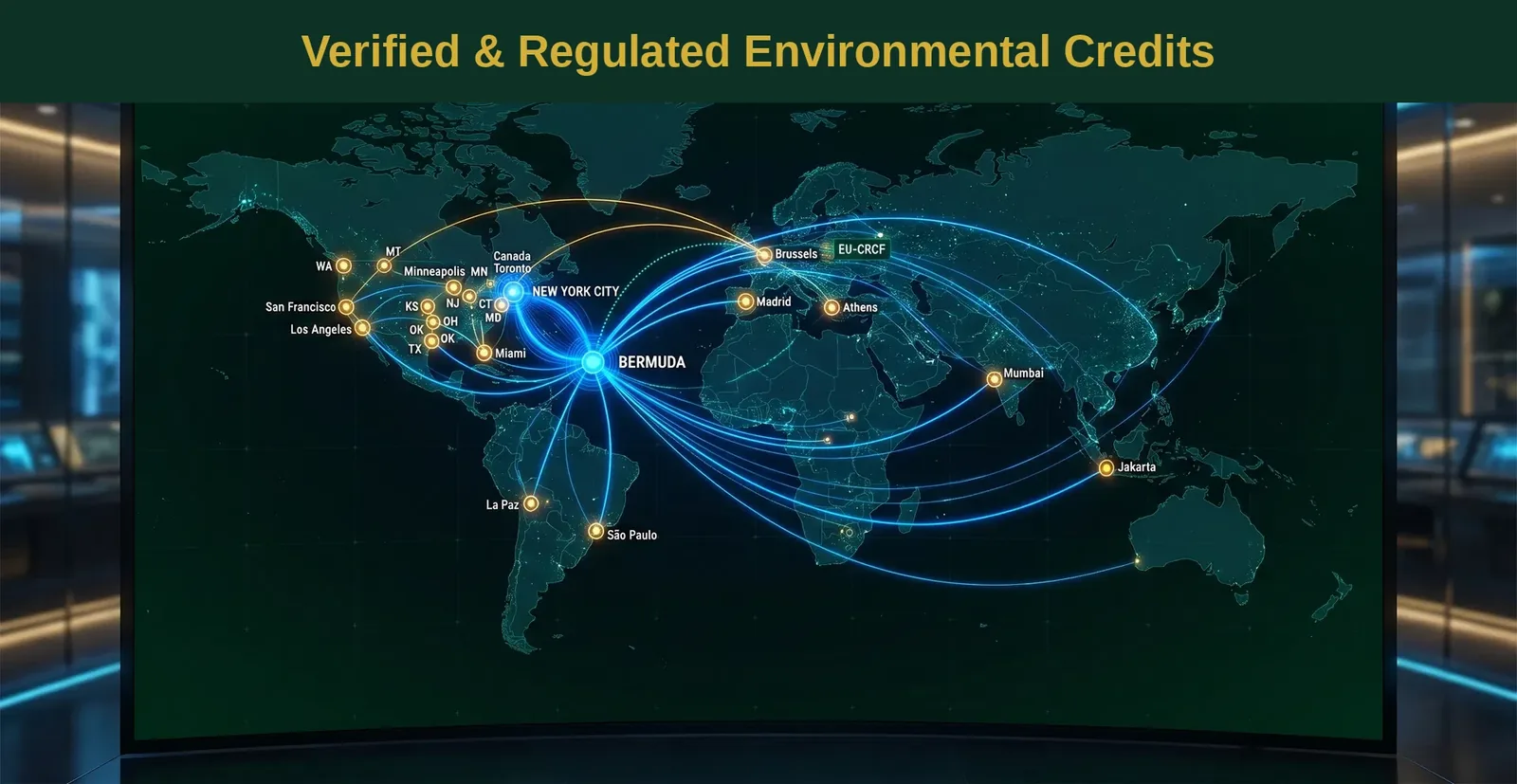
Verified and regulated environmental credits mapped globally
Three actions

Mint, retire, transfer

01

Mint

Create a regulated asset backed by verified project data. Each one is linked to its underlying registry credit, frozen at the registry or held in a Triangle account there.

02

Retire

Cancel permanently to make the claim. Recorded on chain and in the registry, for your own assets or on behalf of another party, as auditable proof for CSRD, TCFD and ISSB.

03

Transfer

Move ownership between Triangle accounts, to external custodians, or back to a registry account, every counterparty cleared through AML and KYC first.

External credits

Two ways across

Credits that originate in external registries come onto the rail by one of two pathways, chosen by the client.

  • Ledger format: the credit stays at its registry, frozen in a Triangle account there, and a digital asset mirrors it one to one. Retirement unfreezes and cancels the original at source.
  • Asset format: the credit transfers into a Triangle account and converts in full, with its project metadata and verification documents attached to the asset.
  • Mirrored assets work the way a depositary receipt does: an instrument on one venue representing a holding on another, backed one to one, kept in sync.
The difference

Regulated registry, traditional registry

Both hold a record. Only one produces something a bank can hold.

CapabilityTraditional registryTriangle
Regulatory status of the assetUnregulatedIssued under BMA licence, DABA 2018
Bank custody and balance sheetNot availableAvailable through qualified custodians
Collateral and structured productsNot availableAvailable
Credit ratings and insuranceNot availableAvailable
SettlementRegistry transferOn-chain, with a settlement history per serial
Counterparty checksRegistry account rulesAML, KYC and anti-terrorist-financing before an account can hold or move an asset
Liquidity pool

Where supply meets demand

The pool is a segregated account structure that makes regulated credits available to different demand pathways at once. Buyers draw from it in block or by the transaction; suppliers list into it.

  • Micro or block transactions from the same pool
  • Stablecoin and programmable settlement for on-demand retirement
  • Card payment at checkout for consumer pass-through
  • An exchange-traded path for credits held rather than retired
  • Availability and pricing move with the pool; the listings show what it holds today
A real-world application of digital twinning

A central securities depository for digital assets

As the digital asset industry grows, custody banks and prime brokers need the same service a CSD provides for securities: a single, regulated place where ownership is recorded, settlement is final and transfer is permissioned. It is how they grow their assets and show clients and investors a benchmark other firms cannot.

The Triangle Registry is that depository for the assets it issues. By connecting asset managers, prime brokers, custody banks and the other stakeholders around an asset, it provides real-time settlement and transfer on a permissioned basis, with the chain of custody recorded for the life of the instrument.

01

Record

Issuance, ownership and transfer per serial, under BMA oversight.

02

Settle

Real-time settlement between permissioned counterparties.

03

Custody

Held by qualified custodians, banks and prime brokers.

04

Route

Asset data reaches every holder that is entitled to it.

Learn more

Next step

See the assets

The listings show what the pool holds today. The team can walk you through the registry.